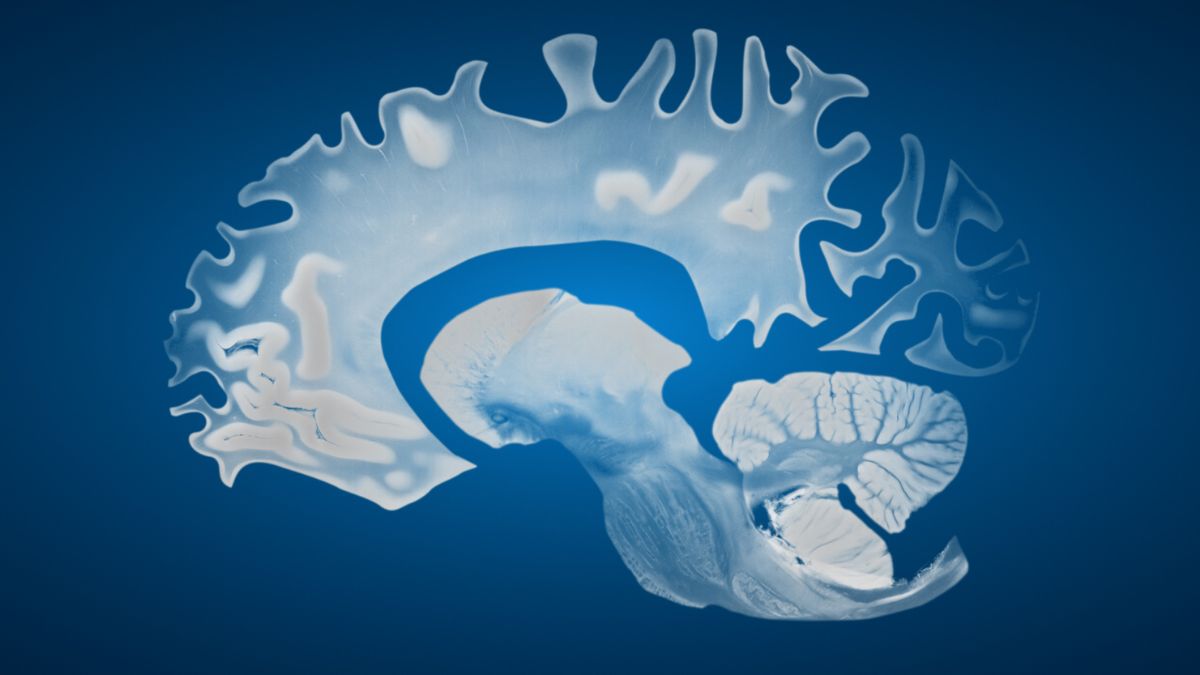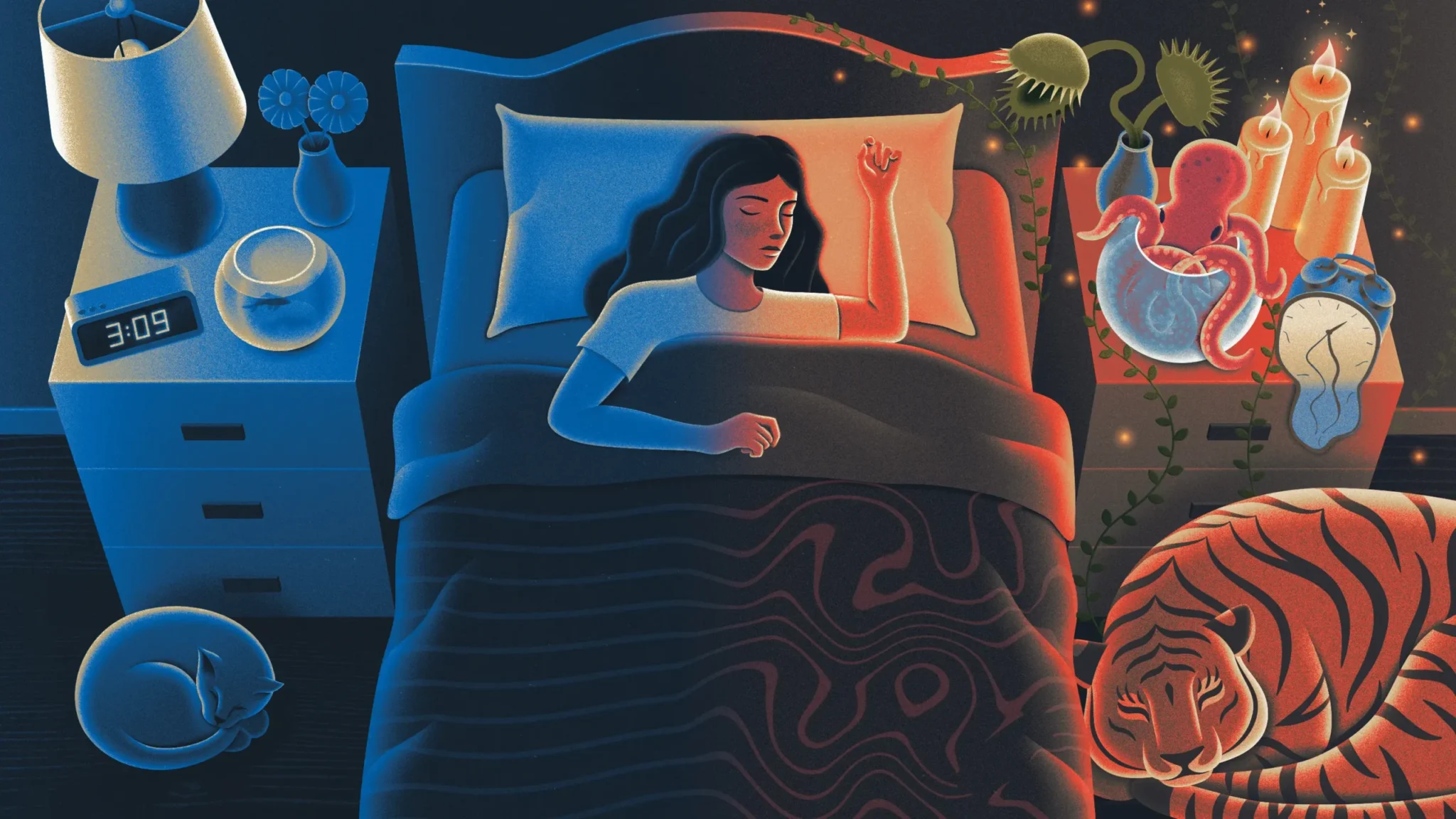


Every night, your brain spins entire worlds out of thin air: flooded cities, impossible exams, lost loved ones suddenly alive again. For generations, dreams were treated as either mystical messages or random mental noise, an unruly sideshow to waking life. Now, neuroscience is quietly rewriting that script, revealing dreams as deeply wired into memory, emotion, and even our sense of self. New brain-imaging tools, sleep-lab experiments, and large-scale tracking apps are turning the messy theater of the night into hard data. What they’re finding is surprisingly clear: dreams are not background static – they’re active work.
More, here.